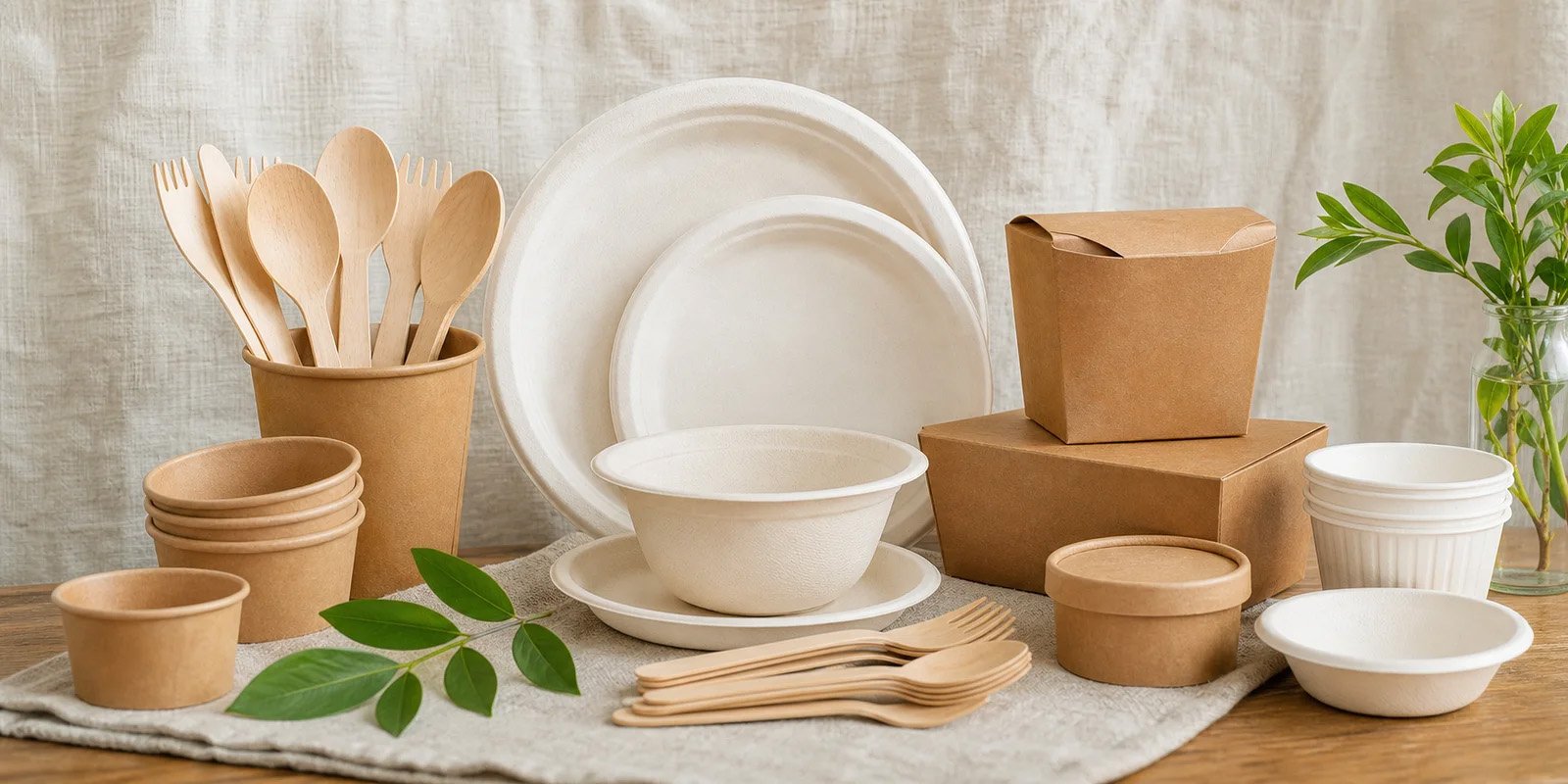
Disposable tableware has become part of everyday food service. It keeps takeaway orders convenient, supports outdoor events, and helps restaurants serve large numbers of guests efficiently. Yet not every plate, bowl, cup, fork, or food container performs in the same way. The right choice depends on the food being served, the temperature, the required strength, and how the product will be handled after use.
Understanding the main materials and their limitations makes it easier to choose products that are practical, safe, and better aligned with environmental goals.
Common materials used in disposable tableware
Plastic tableware is lightweight, economical, and resistant to moisture. It can be suitable for cold meals, desserts, salads, and many takeaway applications. However, different plastics have different heat tolerances. A container that works well for a cold salad may not be appropriate for hot soup, oily food, or microwave reheating. Always check the manufacturer’s temperature guidance and food-contact information.
Molded fiber products are often made from sugarcane bagasse, bamboo pulp, or other plant fibers. Plates and bowls made from these materials usually have a natural appearance and good rigidity. They are popular for rice dishes, sandwiches, salads, and casual catering. Their resistance to oil and liquid can vary, so buyers should test the product with the foods they actually plan to serve.
Paper and kraft containers are widely used for bakery items, salads, noodles, and takeaway meals. They are easy to print, stack, and transport. The inner coating is important because it affects grease resistance, leak protection, recycling options, and suitability for hot food.
Wooden and bamboo cutlery offers a simple, natural look that works well for cafés, parties, tasting events, and outdoor dining. Good-quality pieces should feel smooth, remain firm during use, and have no sharp splinters or strong odor.
What should buyers check?
Start with the packaging and product specification. Reliable disposable tableware should clearly identify the material, manufacturer, intended food-contact use, storage advice, and temperature range. The surface should be clean and even, without visible contamination, rough edges, cracks, or an unusual smell.
Match the product to the menu. Hot soup requires heat resistance and a secure lid. Fried food needs reliable grease resistance. A large meal needs a container with enough structural strength to avoid bending during delivery. For children, rounded edges and resistance to breakage are especially important.
Businesses should also test stacking, lid fit, portion size, and performance during transport. A product may look attractive on a shelf but still fail if it leaks after twenty minutes in a delivery bag.
Disposable does not mean reusable
Most single-use products are designed for one serving cycle. Washing, reheating, or repeated use can damage surfaces and reduce stability. If a takeaway container arrives cracked, distorted, leaking, or carrying an unusual odor, transfer the food to a suitable container.
Leftovers should only be refrigerated in the original packaging when the product is intended for cold storage. For reheating, move food to a container clearly marked as microwave- or heat-safe unless the disposable package specifically permits reheating.
Reducing environmental impact
The most effective first step is to avoid unnecessary items. Restaurants can let customers choose whether they need cutlery and provide the correct quantity for each order. Offices and frequent travelers can keep a reusable set available for daily meals.
When disposable products are necessary, select materials that fit local collection and waste-treatment systems. “Compostable” does not mean that an item will disappear quickly in any environment; many products require managed composting conditions. Likewise, paper packaging may be difficult to recycle when it is heavily contaminated with food or combined with certain coatings.
Clear disposal instructions help customers make better decisions. Businesses can also reduce impact by choosing appropriately sized packaging, minimizing unnecessary wrapping, and purchasing from suppliers that provide transparent material and compliance information.
A balanced choice
Disposable tableware provides real value when hygiene, speed, portability, and convenience are priorities. The best option is not simply the cheapest or the product with the strongest environmental claim. It is the product that safely matches the food, performs reliably throughout service, and has a realistic end-of-life route.
By checking materials, temperature limits, strength, leak resistance, and local disposal options, consumers and food businesses can make choices that balance convenience with safety and responsible resource use.
Hello, I’m Linda, a senior international sales professional with 20 years of experience in foreign trade.With 20 years of experience, I understand that sales is not just about making a deal—it’s about building trust and creating sustainable partnerships.
Sylvia
Hello, I’m Sylvia,Over the years, I’ve worked with customers from different countries and gained extensive experience in sales, negotiation, and customer relationship management.I always believe that successful business is built on trust, quality, and long-term cooperation.
Blake
Hi, I’m Blake.I specialize in customer development, business negotiation, and building long-term relationships with overseas clients. I’m committed to providing professional solutions and creating long-term value for our customers.It’s a pleasure to connect with you.
Hello, I’m Linda, a senior international sales professional with 20 years of experience in foreign trade.
With 20 years of experience, I understand that sales is not just about making a deal—it’s about building trust and creating sustainable partnerships.
Sales Director Sylvia
Hello, I’m Sylvia,
Over the years, I’ve worked with customers from different countries and gained extensive experience in sales, negotiation, and customer relationship management.
I always believe that successful business is built on trust, quality, and long-term cooperation.
Sales Director
Hi, I’m ZZZ.
I specialize in customer development, business negotiation, and building long-term relationships with overseas clients. I’m committed to providing professional solutions and creating long-term value for our customers.