
Paper

Compostable vs Biodegradable: What’s the Real Difference?

Compostable vs Biodegradable: Why the Difference Matters

As sustainability becomes a key purchasing factor for businesses and consumers alike, the terms "compostable" and "biodegradable" are appearing everywhere—from food packaging and disposable tableware to shopping bags and takeaway containers. Although these two words are often used interchangeably, they do not mean the same thing.

Understanding the difference is essential for restaurants, wholesalers, importers, and retailers who want to choose environmentally responsible products while meeting local regulations and customer expectations.

In this guide, we'll explain what compostable and biodegradable really mean, how they differ, and which option is better for your business.

What Does Compostable Mean?

A compostable product is designed to break down into natural elements such as water, carbon dioxide, and nutrient-rich organic matter under specific composting conditions. Unlike ordinary waste, compostable materials leave no harmful residues or toxic substances behind.

There are two main types of composting:

Home Compost

Home composting takes place in backyard compost bins or garden compost piles. The temperature is relatively low, and decomposition is slower. Only products specifically certified for home composting can fully break down under these conditions.

Industrial Compost

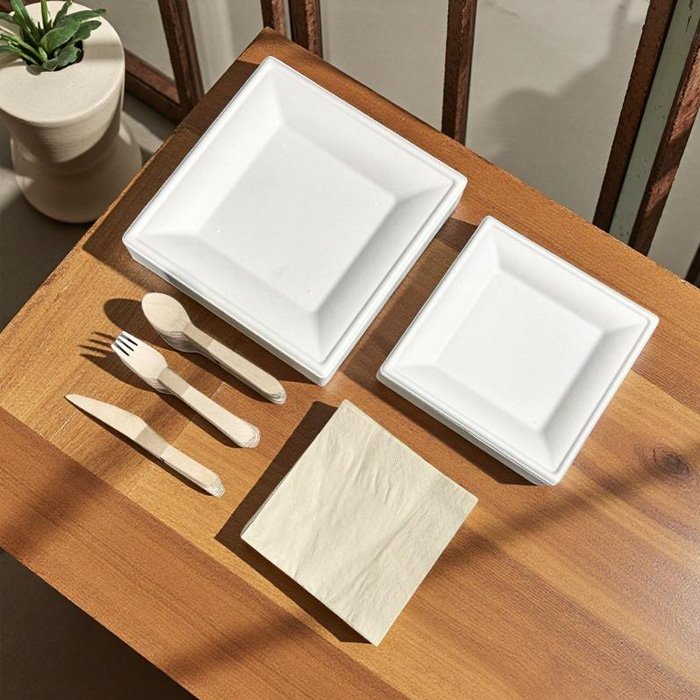
Industrial composting facilities operate at much higher temperatures with controlled humidity and oxygen levels. Most compostable disposable tableware, including bagasse products, is designed to decompose efficiently in these professional facilities.

What Does Biodegradable Mean?

The term biodegradable simply means that a material can eventually be broken down by microorganisms such as bacteria and fungi.

However, the word does not specify:

  • How long decomposition will take
  • What environmental conditions are required
  • Whether harmful residues remain
  • Whether the material completely returns to nature

Some biodegradable products may take months or even years to decompose, depending on temperature, moisture, sunlight, and microbial activity.

For this reason, biodegradable does not always mean environmentally friendly.

Compostable vs Biodegradable: Key Differences

FeatureCompostableBiodegradable
Breaks Down Naturally
Leaves Toxic ResidueNoMay vary
Time RequirementDefined by certificationNot specified
Compost QualityProduces nutrient-rich compostNot guaranteed
Requires CertificationYesUsually not
Environmental StandardStrictLess specific

Although every compostable product is biodegradable, not every biodegradable product is compostable.

This is one of the most common misconceptions among buyers.


Understanding EN13432 and ASTM D6400

https://images.openai.com/static-rsc-4/Ksxv7cPEFJBxcGMUcJLvwc4mu7rcpdvj43qjnGnpPII17dIMRLkgiSL1RpGknn-4CobbWtvxCutvdybSTSxoEjGWGcRx83vGGlFXVjYQ_HK5vTMC2Wgi4ciKUcCE6UjGt-UiU0gpwyCdY3cXBIIFNp0UItdSiCyguktTrx2AtA8JK7NV5LYCA43RZa8uzN87?purpose=fullsize
https://images.openai.com/static-rsc-4/xutDp-YriEfWM0VLWz4omXwFGwxM3G0KW4We8Erc2WIe6InUrNXIiaEz2dhizhnT_rZ4VPHvyV5tYUAny4ITMYlSnfSZ1TaT7CSc456A9P9eIuPUcnjdSd-fEYnaBqkyizUadkvgDalrVbpt4SrLOqQZGNVHk4mV0SxYhYCu0NJEFZc_bxFSEdfQgKK8axTi?purpose=fullsize
 

When purchasing compostable tableware for international markets, certifications play an important role.

EN13432

EN13432 is the European standard for compostable packaging.

To comply with EN13432, a product must:

  • Biodegrade within a specified time
  • Disintegrate during composting
  • Leave no harmful residues
  • Meet strict heavy metal limits

This certification is widely recognized throughout Europe.

ASTM D6400

ASTM D6400 is the primary compostability standard in the United States.

Products certified under ASTM D6400 are tested for:

  • Biodegradation
  • Compost quality
  • Disintegration
  • Environmental safety

Many North American buyers specifically request ASTM-certified compostable products.


Which One Should You Choose?

If your goal is to reduce environmental impact while meeting modern sustainability standards, compostable tableware is generally the better choice.

Compostable products provide:

  • Clear environmental performance
  • Recognized international certifications
  • Better acceptance in global markets
  • Greater confidence for restaurants and consumers

Biodegradable products can still be useful in certain applications, but without clear certification, it is often difficult to verify how they perform in real-world conditions.

For importers and distributors, certified compostable products offer greater transparency and stronger market credibility.


Conclusion

While the terms compostable and biodegradable may sound similar, they represent different environmental standards.

  • Compostable products break down into nutrient-rich organic matter under controlled composting conditions and are backed by recognized certifications such as EN13432 and ASTM D6400.
  • Biodegradable products can decompose naturally, but the process, timeline, and environmental impact are often less clearly defined.

For businesses seeking reliable, eco-friendly disposable tableware, choosing certified compostable products is the safest and most sustainable long-term solution.


发表回复

您的邮箱地址不会被公开。 必填项已用 * 标注